

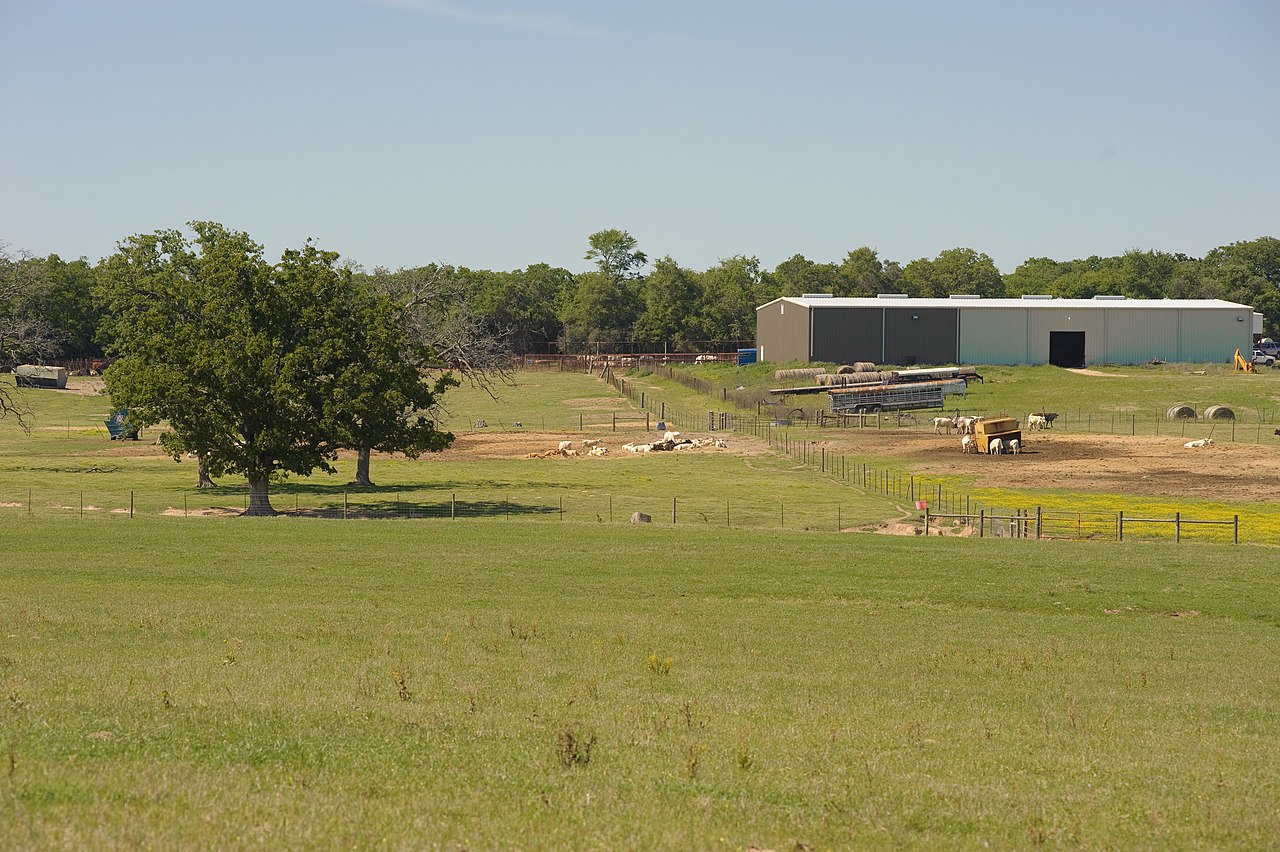
Drive the farm-to-market roads around Cooke County long enough and you learn to read the little orange flags. Wire stakes, straight rows, planted where the hay used to lean in the wind. Survey flags. Anybody who has lived out here a while knows what crop comes after them. Driveways and rooflines and a subdivision sign with the word "Ranch" stamped on it, sold to folks who will never run a single cow across it.
Those plats move through the county's Subdivision and Development Department and across the Commissioners Court agenda one at a time, reviewed for septic and platting and not much else. They rarely draw a crowd.
Say the words "data center" out loud, though, and watch the room fill up. The phrase has turned into a kind of magic word in Texas, the thing everyone loves to be against. The Cooke County Commissioners Court felt that heat, and on May 11 it passed a resolution calling for tighter state regulation of these facilities. County Judge John O. Roane and Commissioners Gary Hollowell, Jason Snuggs, Adam Arendt and Matt Sicking sent it up the chain to Gov. Greg Abbott, Lt. Gov. Dan Patrick, State Sen. Phil King, State Rep. Helen Kerwin and a stack of state agencies.
Here is where we part from the crowd. The anger pointed at data centers is aimed at the easy target. The real, permanent loss is happening out in those hayfields, and almost nobody is shouting about it.
Start with what these buildings actually are, because the fear runs ahead of the facts. A data center is a warehouse full of computers. It holds the photos on your phone, runs the websites you shop on, keeps the bank records and the farm software, and now trains the artificial intelligence everybody is racing to build. Those machines have to live somewhere, and Texas, with cheap land and a power grid all its own, has become the place. Axios reported this month that the state already has 405 of them, with 442 more planned or under construction. That demand is not going away because a county passes a resolution.

So do they really guzzle water and roar like a jet engine? Partly. A single large facility can draw up to about two million liters of water a day, by International Energy Agency figures. That is a real number, not a scare. But it swings hard depending on the cooling design. The water hogs are the open-loop evaporative systems that boil off drinking water into the air. Closed-loop and reclaimed-water setups sip a fraction of that. Read the county's own resolution and you will find it does not ask to ban data centers. It supports responsible development, these facilities included, and draws the line right at the high-volume potable-water cooling worth fighting in a county that worries about its wells. That is a narrow, smart target, and we would sign it.
The noise is real too, and also a question of where. Reporting built on Environmental and Energy Study Institute data has clocked continuous industrial hum as high as 96 decibels, with a low infrasound throb neighbors can feel as much as hear, worse when backup generators kick on. Build one next to a house and you have a fight on your hands. Build one a mile from anybody and the complaint mostly fades. These are problems of placement and design, not problems of whether the thing should exist. The county gets that, which is why it asked the state to require public reporting of power and water demand before approval. Reasonable.
Now turn around and look at the hayfield.
Texas Land Trends, run out of Texas A&M, reports the state lost nearly 3.7 million acres of working farms and ranches between 1997 and 2022. More than 1.8 million of those acres vanished in just the last five years of that count. The engine is no mystery. Rural land that fetched $499 an acre in 1997 was appraised at $3,021 by 2022, and the closer the ground sits to a growing metro or a good highway, the harder the pull to carve it into half-acre lots and cash out. Gainesville sits right in that path, an hour up I-35 from a metro that keeps spilling north.
The loss is speeding up
Cumulative Texas farm and ranch acres lost since 1997, in millions.
Source: Texas Land Trends, Texas A&M
Here is the part the data-center fight keeps missing. A server farm is reversible. Decommission it, haul out the racks, break the slab, and the ground can be graded and put back to grass. A subdivision is forever. Once a quarter-section is platted, paved and deeded out to forty owners, it is never coming back. No resolution un-pours that concrete. The thing we are furious about can be undone. The thing we wave through cannot.
Which one can you undo?
A data center
Reversible. Decommission it, haul out the racks, break the slab, and the ground can be graded and put back to grass.
A subdivision
Permanent. Once a quarter-section is platted, paved, and deeded out to forty owners, it never comes back.
Why the lopsided outrage? Some of it is that data centers are new and strange and wear a corporate face you can boo. Subdivisions look like progress, and like a neighbor's retirement. But there is a harder reason the bulldozers win quietly. As the county's resolution itself points out, Texas counties have almost no zoning power over unincorporated land. The court can review a plat and a septic plan, and that is about the end of its leverage. A developer can split a working ranch into lots and the county has little standing to say no. The same gap that makes data centers hard to regulate makes farmland subdivision nearly impossible to stop.
Follow the money and the pattern sharpens. Texas hands data-center operators a sales-tax exemption that cost the state $14.6 million a decade ago and is projected to climb toward $3.3 billion by the end of this decade. Even Gov. Abbott has now told the Public Utility Commission and ERCOT to keep these companies from dumping their power-line costs onto your electric bill, and floated repealing some of those breaks. Good. Because the breaks flow to tech moguls a thousand miles away and to the firms that pour the subdivisions, not to the family still trying to make a living off the land it was raised on. The fellow down the road gets the higher water bill, the busier county road, the view of someone else's rooftop where the hayfield used to be.
The city is making these choices right now, in public, if you care to watch. On Tuesday's council agenda sat a $21 million state grant application for a raw-water pump station, fresh impact-fee hearings set for July 21, a committee to rewrite the zoning and subdivision rules toward the Guiding Gainesville 2040 plan, and incentive deals for a couple of private outfits. Water, growth, and who pays for it, all on one night. Mayor Tommy Moore and the council are deciding what Gainesville looks like in 2040 whether the rest of us show up or not.
But the choice was never just bulldoze it or ban it. Other places have used the market instead of asking farm families to donate their retirement. Pennsylvania buys agricultural conservation easements outright from farmers; the state calls it the largest such program in the country, more than 6,000 farms and over 600,000 acres preserved since its first easement in 1989. Maryland built a land-preservation foundation back in 1977 and has put easements on hundreds of thousands of acres since. The farmer keeps the farm. The public buys the development pressure.
Montgomery County, Maryland, went one step fancier and still kept the cash register ringing. Its transfer-of-development-rights program lets a farm owner sell the house lots he is never going to build to a developer who wants more density where the roads and sewer already run. That is not confiscation. That is a property right with a buyer. California's Williamson Act and Texas' own 1-d-1 open-space appraisal work the same plain way through the tax rolls: value farm ground by what it can grow, not by what a speculator imagines on it. Keep it working, get a break. Turn it into rooftops, pay the difference.
Conservation is half of the word conservative, or the word has stopped meaning anything. So be skeptical of the data center next door. Ask about the cooling system, the water draw, how close it sits to a bedroom window. Then save some of that same energy for the survey crew. Aim it at a tax code that subsidizes billionaires and a system that lets a ranch be sliced into lots while the county stands by with its hands tied.
The orange flags keep going up out there in the grass, ticking off the lot lines, patient as anything. The server farm we can argue about for years and tear down in an afternoon. The hayfield gets one chance.
Join the conversation
Comments